
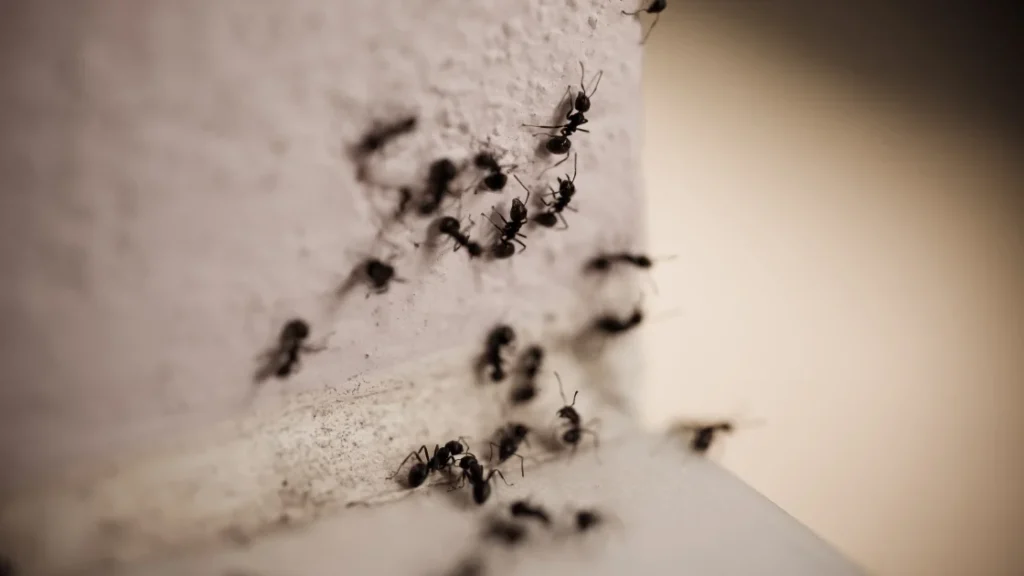
Dealing with ants is frustrating enough, but telling the difference between carpenter ants and regular ants can be a challenge in and of itself. But while some ants are just looking for a dropped sugar crumb, others are actively tunnelling through the wooden framing of your house.
If you are dealing with carpenter ants, ignoring them can lead to thousands of dollars in structural repairs. If you are dealing with regular ants, the fix is much simpler.
Here is how to tell the difference quickly so you know exactly how worried you should be.
Carpenter Ants vs. Regular Ants: Side-by-Side Visual Traits
At a glance, all ants look somewhat similar. However, if you trap one under a glass or look closely, a few distinct physical traits will give away its identity immediately.
Feature | Carpenter Ants | Regular Ants |
Size | Large (6mm to 13mm or a quarter inch to a half inch | Small (1.5mm to 3.2mm or 1/16 inch or an eighth inch) |
Thorax (Body Shape) | Smooth, evenly rounded, symmetrical curve on the back | Uneven, bumpy, or ridged thorax |
Colour | Mostly solid dull black, though some have reddish-brown midsections | Varies from shiny black, brown, yellowish, to light brown |
Antennae | Bent/elbowed | Bent/elbowed |
Waist | A single, sharp node (bump) between the body sections | One or two nodes, usually less prominent |
The Size Rule of Thumb: If the ant looks shockingly large, almost the size of a small paperclip, it is highly likely a carpenter ant.
Q: Do carpenter ants actually eat wood?
A: No. Unlike termites, carpenter ants do not eat or digest wood. They simply chew through it to excavate smooth tunnels and galleries for their nests, discarding the wood fragments as sawdust.
Q: Can I get rid of carpenter ants with domestic ant spray?
A: No. Spraying visible carpenter ants with standard over-the-counter bug spray will only kill the few foragers on the surface. Worse, the chemical threat triggers a survival reaction, causing the hidden colony to panic and split into multiple nests throughout your walls.
Carpenter Ants vs. Regular Ants: Behaviour Differences
The biggest difference between these species isn’t just how they look, but where they live and how they behave. Below are the differences you can try to spot.
Nesting Habits
Regular ants typically build their nests outside under rocks, pavement cracks, or in lawns, occasionally nesting inside walls near a moisture source. They do not damage construction materials. Carpenter ants seek out damp or rotting wood first and expand systematically into timber, carving deep galleries into the structural framing.
Foraging Patterns
Regular ants are known for forming dense, tightly packed lines leading directly to a food source. Carpenter ants are primarily nocturnal and solitary when foraging. You might see just one or two massive ants wandering around your bathroom or kitchen at night, scouting for food and water.
Early Warning Signs of Carpenter Ant Activity
Because carpenter ants hide deep inside wooden structures, you might not always see the ants themselves. Watch out for these three physical indicators of an active colony:
- Frass (Ant Sawdust): As carpenter ants carve out tunnels, they push debris out of the nest openings. If you find small, localized piles of fine sawdust mixed with dead insect parts beneath baseboards or windowsills, you have an active carpenter ant colony.
- Rustling Sounds: A mature colony contains thousands of ants. If you press your ear against a suspected wall in a quiet room at night, you can actually hear a faint, dry rustling or clicking sound as they move inside the wood.
Damage Potential: Carpenter Ants vs. Regular Ants
The long-term consequences of an unchecked infestation vary wildly between these two categories:
- Regular Ants (Low Risk): These are primary nuisance pests. They do not cause structural damage. Their risks are limited to food contamination and the general hassle of their presence.
- Carpenter Ants (High Risk): Over months and years, a parent colony and its nests can structurally weaken the wooden supports of your home. They target areas exposed to moisture first (leaky roofs, plumbing leaks, damp crawlspaces) and then spread to sound wood, warping window frames, sagging ceilings, and require extensive structural reconstruction.
When to Call a Professional Regarding Ants
While a DIY ant bait might temporarily halt a group of regular ants, DIY methods rarely work on carpenter ants. Spraying a visible trail of carpenter ants with domestic insecticide will only cause the colony to stress-scatter, making the infestation worse.
Call Ecopest immediately if you notice:
- Persistent sightings of large black ants inside, especially during freezing winter or early spring months.
- Piles of frass (sawdust) near wooden structures.
- A group of large ants emerging from walls or windowsills.
Don’t let hidden pests compromise your biggest investment. Contact Ecopest today for a thorough inspection and targeted treatment plan.