
Hearing scratching sounds in your walls or discovering droppings in your pantry triggers immediate concern, but knowing whether you’re dealing with mice or rats makes all the difference in how you respond. These two rodents require different control strategies, pose distinct risks to your property, and leave behind different types of evidence. Misidentifying the pest can lead to ineffective treatments and wasted time while the infestation grows.
After over 35 years serving Edmonton, Calgary, Victoria, and Vancouver homes, Ecopest’s QualityPro Canada certified technicians have identified thousands of rodent infestations. Understanding the key differences between mice and rats helps homeowners across Alberta and British Columbia recognize what they’re dealing with and take appropriate action before minor problems become major infestations.
Why Correct Identification Matters
Mice and rats are both rodents, but they behave very differently. Mice are curious and will readily explore new objects and food sources, making them easier to trap but also more likely to spread throughout your home quickly. Rats are neophobic which means that they fear new things and avoid unfamiliar objects for days or even weeks, making them much more challenging to control.
The damage they cause differs significantly as well. Mice create small, neat gnaw marks and typically cause cosmetic damage. Rats have much stronger jaws and can chew through wood framing, plastic pipes, and even electrical wiring which creates serious fire hazards.
Control methods must match the rodent species. Snap traps sized for mice won’t effectively catch rats. Bait formulations and placement strategies differ between species. Understanding which rodent has invaded your Edmonton, Calgary, or Vancouver home allows for targeted, effective control that eliminates the problem rather than just reducing it temporarily.
Size and Physical Appearance
The easiest way to distinguish mice from rats is size, though you’ll rarely see them side-by-side for comparison.
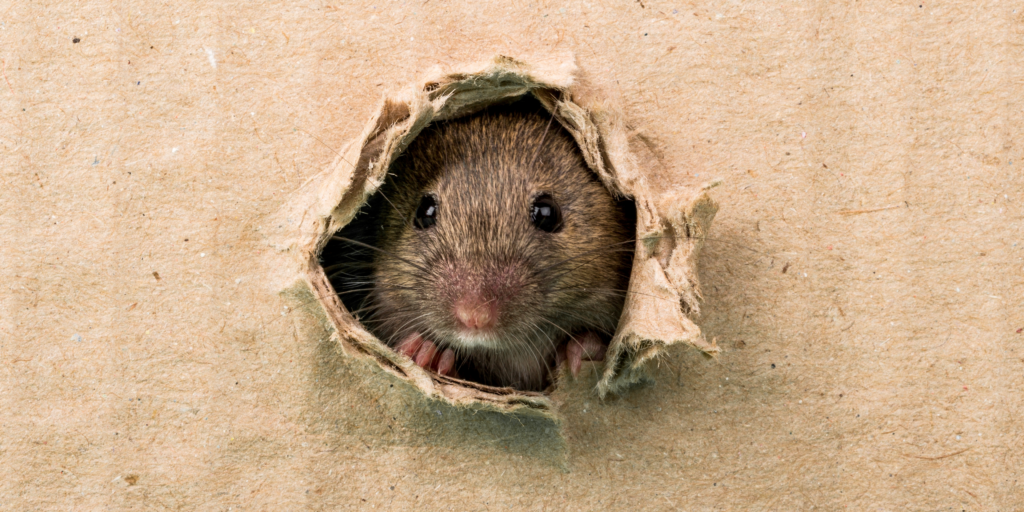
House Mice are small, typically 2.5 to 4 inches long (not counting the tail) and weighing only half an ounce to one ounce. Their tails are thin and roughly as long as their bodies. Mice have large ears relative to their head size, small black eyes, and pointed noses. Their fur is usually dusty gray or light brown.
Norway Rats (the most common rat species in Canadian homes) are much larger, measuring 7 to 9 inches long, their bodies weighing up to 18 times more than mice. Their tails are shorter than their body length, thick, scaly, and hairless. Rats have small ears relative to their large heads and blunt noses. Their fur is coarse, typically brown or gray.
If you spot the rodent itself, size tells you immediately which species you’re dealing with. However, most homeowners discover evidence instead.
Droppings: The Most Reliable Evidence
Rodent droppings are often the first sign homeowners notice, and they’re one of the most reliable ways to identify whether you have mice or rats.
Mouse Droppings:
- Very small: roughly 1/8 to 1/4 inch long (about the size of a grain of rice)
- Thin and pointed at both ends
- Dark brown to black when fresh
- Scattered randomly along baseboards, in drawers, and on countertops
Rat Droppings:
- Much larger: 1/2 to 3/4 inch long (about the size of a raisin)
- Thick and blunt at the ends, capsule-shaped
- Dark brown to black, shiny when fresh
- Found in concentrated piles near feeding areas
- Commonly discovered in attics, basements, and along exterior walls
Fresh droppings indicate active infestation. If you find droppings, note their size, shape, and location. This information helps Ecopest technicians assess the severity of your infestation and determine the best control strategy.
Gnaw Marks and Damage Patterns
Both mice and rats must gnaw constantly to keep their continuously growing teeth worn down, but the damage they create looks different.
Mouse Gnaw Marks:
- Small, fine scratches approximately 1/16 inch wide
- Found on cardboard boxes, paper, plastic food containers, and fabric
- Damage tends to be scattered and exploratory
- Mice shred soft materials like insulation for nesting
Rat Gnaw Marks:
- Large, rough gouges approximately 1/8 to 1/4 inch wide
- Found on wood framing, plastic pipes, electrical wiring, and door frames
- Damage is more aggressive and structural
- Can chew through materials that mice cannot penetrate
In Alberta homes during winter, both species may gnaw on exterior building materials trying to gain entry as temperatures drop. The size and depth of these gnaw marks tell experienced technicians which rodent is attempting entry.
Sounds and Activity Patterns
The sounds rodents make and when you hear them provide important identification clues.
Mouse Activity:
- Light scratching or scurrying sounds, especially at night
- Fast, pattering movements
- High-pitched squeaking or chirping sounds
- Most active at night but occasionally seen during the day
Rat Activity:
- Heavier scratching, thumping, or dragging sounds
- Slower, more deliberate movements
- Lower-pitched squeaking, occasional hissing or grinding teeth
- Strictly nocturnal – daytime sightings indicate severe infestation
If you hear heavy thumping in your walls or attic at night, you’re likely dealing with rats. Light, rapid scratching sounds typically indicate mice. In Edmonton and Calgary homes, increased rodent activity often begins in October and November as outdoor temperatures drop and rodents seek shelter for winter.
Grease Marks and Travel Patterns
Rodents use the same pathways repeatedly, leaving behind distinctive “rub marks” or “grease marks” from their oily fur.
Mouse Grease Marks: Light gray smudges along baseboards at floor level, thin and delicate.
Rat Grease Marks: Dark, heavy smudges along walls, pipes, and beams that build up over time.
These marks reveal exactly where rodents are traveling, which informs trap and bait placement strategies during professional treatment.
Nesting Locations and Materials
Mouse Nests:
- Located almost anywhere: inside walls, in attics, behind appliances, in storage boxes
- Built from shredded paper, fabric, and insulation
- Small, roughly the size of a grapefruit
- Prefer hidden, warm locations close to food sources
Rat Nests:
- Typically in lower areas: basements, crawl spaces, ground-level wall voids
- Larger and more substantial than mouse nests
- Often located near water sources
- Norway rats may burrow into soil around foundations
In Vancouver’s coastal climate, rats often nest in crawl spaces where moisture doesn’t deter them. In Edmonton and Calgary, mice more likely nest in upper floors and attics.
Food Preferences and Feeding Behavior
Mice:
- Prefer grains and cereals but will eat almost anything
- Take small nibbles from many different food sources
- Feed 15 to 20 times per night in various locations
- Leave behind scattered crumbs and partially eaten items
Rats:
- Prefer protein-rich foods like meat and pet food
- Eat larger quantities at fewer feeding sites
- Feed once or twice per night at established locations
- Require regular access to water
- Create caches of food carried back to nesting areas
If you find small nibbles from multiple food items throughout your pantry, mice are likely responsible. Significant quantities missing from concentrated areas suggest rats.
Odour: An Often-Overlooked Clue
Mouse Odor: Musty, slightly sweet smell noticeable in enclosed spaces like cabinets and closets.
Rat Odor: Strong, musky ammonia smell that’s pervasive throughout affected areas. Unmistakable in severe infestations.
If you detect a strong ammonia odor in your basement or crawl space, rats are more likely present than mice. The intensity indicates how long the infestation has been established.
How Quickly Do Infestations Grow?
Understanding rodent reproduction rates explains why even a small initial problem can become severe quickly.
Mice:
- Reach sexual maturity at 6 to 8 weeks old
- Females produce 5 to 10 litters per year
- Each litter contains 5 to 6 babies
- Population can explode in just a few months
Rats:
- Reach sexual maturity at 2 to 3 months old
- Females produce 4 to 6 litters per year
- Each litter contains 6 to 10 babies
- Infestations grow more slowly but individuals cause more damage
Both species can create serious infestations remarkably quickly, which is why early identification and professional control are critical. What starts as one or two rodents in fall can become dozens by late winter.
Geographic and Seasonal Patterns in Alberta and British Columbia
Edmonton and Calgary (Alberta):
- Extreme winter temperatures drive both species indoors starting in October
- House mice are more common in residential properties
- Peak infestation calls occur November through March
- Learn more about seasonal pest control in Edmonton
Vancouver and Lower Mainland (British Columbia):
- Milder, wetter climate supports year-round rodent activity
- Higher rat populations due to coastal environment and urban density
- Moisture issues in crawl spaces attract both species
- Explore Vancouver pest control services
What to Do If You’ve Identified Mice or Rats
Once you’ve determined whether you have mice or rats, prompt action prevents the infestation from worsening.
Immediate Steps:
- Clean up droppings carefully using gloves and disinfectant
- Remove accessible food sources by storing items in sealed containers
- Eliminate water sources by fixing leaks
- Seal obvious entry points with steel wool or metal flashing
- Document what you’ve observed including locations and damage
When to Call Ecopest:
- You’ve identified droppings in multiple locations
- You hear scratching or movement inside walls or ceilings
- You see signs of structural damage from gnawing
- DIY traps haven’t reduced activity after several days
- You’re unsure whether you have mice or rats
Ecopest’s certified technicians serving Edmonton, Calgary, and Vancouver bring specialized expertise in rodent identification and control. Our Integrated Pest Management approach combines inspection, exclusion, population reduction, and monitoring to eliminate infestations completely.
Why Professional Rodent Control Works Better
DIY rodent control rarely achieves complete elimination because homeowners typically address only the visible portion of the problem. Professional rodent control from Ecopest includes comprehensive inspection identifying all entry points, species-specific control strategies matched to rodent behavior, exclusion work sealing entry points to prevent re-infestation, sanitation guidance addressing conditions that attract rodents, and follow-up monitoring ensuring complete elimination.
Our QualityPro Canada certification and decades of experience across Western Canada mean we recognize subtle signs and implement control methods that work fastest for your situation. Learn more about our approach to rodent control.
Protect Your Edmonton, Calgary, or Vancouver Home from Rodents
Correctly identifying whether you have mice or rats is the first step toward effective control. Understanding the differences in size, droppings, damage patterns, sounds, and behavior helps you recognize which rodent has invaded your property.
Don’t wait for a small rodent problem to become a major infestation. The longer mice or rats remain in your home, the more damage they cause and the harder they become to eliminate completely.
Our certified technicians will identify exactly which rodent you’re dealing with, explain the extent of your infestation, and implement effective control strategies that protect your property and your family. Request a consultation today with Ecopest.